Facial Treatment With Suspension Threads in Cranbourne
Facial treatment with suspension threads in Cranbourne
As we age, our skin’s collagen and elasticity change, which can contribute to skin laxity. A facial treatment with suspension threads may be considered to support and tighten selected areas. This is a minimally invasive medical procedure that uses absorbable sutures and does not involve an operation with surgical incisions.
The procedure uses absorbable sutures placed under the skin. A consultation with an appropriately qualified health practitioner is required to assess suitability, discuss alternatives, explain realistic outcomes and limitations, outline risks and recovery, and provide a written estimate of total costs. This information is general in nature and is not medical advice. Results vary between individuals and no outcome can be guaranteed. This service is intended for adults aged 18+.
How does a facial treatment with suspension threads work?
This treatment uses specialised threads (sutures) that are placed under the skin. The threads are positioned to support selected tissues, which may create a subtle tightening effect. The approach and thread selection should be based on your anatomy, skin quality, medical history, and goals.
There are different types of threads that may be used, including absorbable and non-absorbable. Absorbable threads dissolve over time, while non-absorbable threads remain in place. Your practitioner should explain which type is being recommended for you, why it is being recommended, and what risks and limitations apply.
What are PDO threads
PDO threads are made from polydioxanone, a synthetic absorbable material commonly used for surgical sutures. PDO threads may be used for appearance-focused treatments in suitable patients. When placed under the skin, they can be positioned to support tissues and may contribute to collagen stimulation as part of the body’s healing response. The threads are placed using a needle, then secured within the tissue. Some people notice a subtle change soon after treatment, while others notice changes gradually as healing occurs. Outcomes vary between individuals.
What benefits can PDO suspension thread treatment provide?
A PDO suspension thread treatment guide explains how PDO threads may be used for selected areas of the face and neck in suitable patients. The threads are made of a material that is absorbed by the body over time. They may be used to support areas affected by mild to moderate laxity, soften the appearance of some lines, and help contour selected areas. Results are not permanent, and how long changes last varies between individuals. Some people may require more than one treatment or maintenance treatments over time, depending on their goals and clinical assessment.
The procedure
This treatment is typically performed as an outpatient procedure, meaning you usually do not need to stay overnight. The procedure time varies depending on the areas treated and the treatment plan, and this should be discussed during your consultation.
Before the procedure begins, your practitioner may use local anaesthetic to improve comfort, where clinically appropriate. Once you are comfortable, the practitioner makes small entry points and places the threads according to the treatment plan. The entry points may be covered with adhesive dressings.
Recovery
You may experience redness, swelling, bruising, tenderness, and discomfort after the procedure. These effects often improve over time, but the timeframe varies between individuals. You may also feel tightness or a pulling sensation in the treated area as your body adjusts, and this can change as swelling settles and healing progresses.
It is important to rest and avoid vigorous activity for a period after your procedure, as advised by your practitioner. You may also be advised to avoid unnecessary pressure or manipulation of the treated area for a period, and to follow specific sleeping and skincare instructions during early healing. Your practitioner should provide written aftercare guidance and explain what is expected versus what requires prompt review.
Is PDO suspension thread treatment for the face safe?
All medical procedures carry risks. PDO threads are absorbable and are commonly used in medical settings, but this does not remove the risk of side effects or complications. Suitability depends on individual factors such as medical history, skin quality, and the degree of laxity. A consultation is required to discuss your individual risks, the limitations of treatment, and alternative options, including the option of no procedure.
How effective is a facial treatment with suspension threads, and what sort of results can I anticipate?
Some people notice a subtle change soon after treatment, and changes may continue as swelling settles and healing occurs. Results vary and depend on factors such as the area treated, technique, thread type, skin quality, lifestyle factors, and aftercare. Your practitioner should explain what is realistic for you and the likelihood of needing follow-up or future maintenance. Any timeframe discussed should be considered a general guide only and not a guarantee.
What advantages can suspension thread treatments offer?
Compared with an operation, suspension thread treatments may involve smaller entry points and a different recovery profile. However, downtime and side effects still occur and vary between individuals. A consultation is required to discuss whether this option is appropriate for your goals, and to understand the risks, limitations, and recovery expectations.
How long does it take to do a suspension thread treatment?
The average face treatment appointment is approximately one hour, depending on the treatment plan.
The placement of threads may take around 30 to 45 minutes, depending on the number of areas treated.
Once the treatment is completed, you may experience swelling and redness, so it is important to plan your day and social schedule with recovery in mind.
If you are considering this procedure, arrange a consultation with an appropriately qualified practitioner who can assess whether this treatment is suitable for you and discuss alternatives, risks, and recovery.
Understanding outcomes
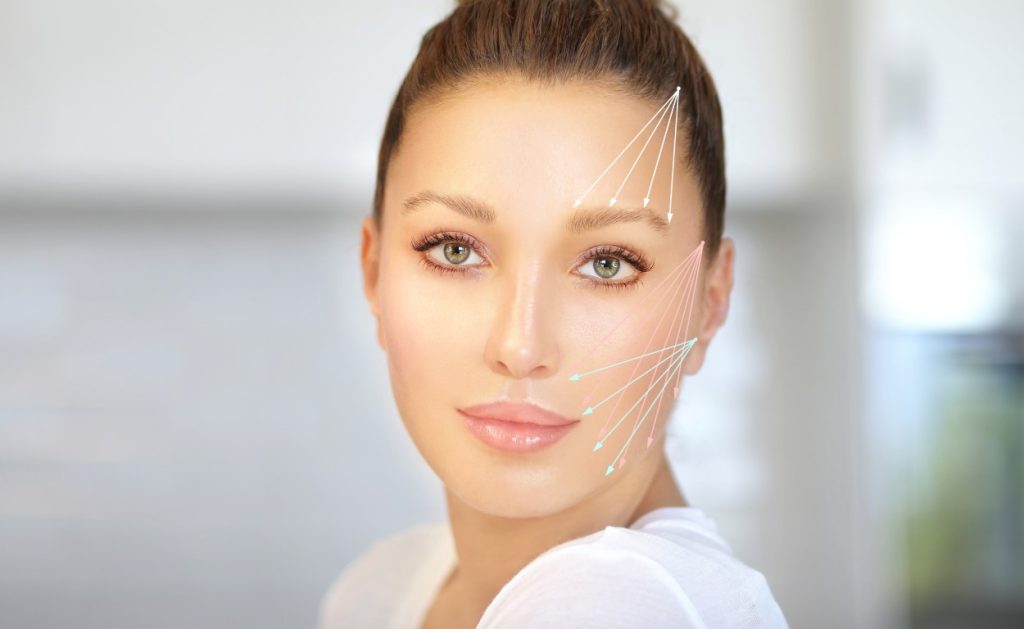
Your practitioner may use diagrams or clinical explanations during consultation to help you understand the type of changes that may be achievable for your anatomy and skin quality. Outcomes vary between individuals, and no outcome can be guaranteed.
Indicative fees for suspension thread services
Fees vary depending on clinical assessment, the areas treated, the number and type of threads used, and the follow-up required. The fees below are indicative only and may change. A written quote should be provided after consultation and should include follow-up and aftercare.
Mid-face suspension thread treatment: $2,200.00
Jawline suspension thread treatment: $2,200.00
Full face suspension thread treatment (mid-face and jawline): $3,450.00
Brow suspension thread treatment: $1,700.00
Outer brow suspension thread treatment: $1,700.00
Nose support thread treatment: $2,075.00
Smile lines area: $887.50
Upper lip area: $637.50
Mouth to chin area: $762.50
Crow’s feet area: $637.50
Frown lines area: $637.50
Neck lines area: $1,200.00
Under eye area: $762.50
Cheeks mono threads: $950.00
Forehead lines area: $762.50
Cheek hollowing area: $950.00
Half décolletage area: $950.00
Add-on mono threads: $362.50
Risks and Recovery
A facial treatment with suspension threads is a medical procedure and involves risks. Individual responses, healing and results vary, and no outcome can be guaranteed.
Possible side effects and complications can include redness, swelling, bruising, tenderness, pain, bleeding, infection, scarring, puckering or dimpling, visible or palpable threads, thread movement or extrusion, unevenness or asymmetry, delayed healing, and temporary or persistent changes in sensation. Rare but serious complications can occur, including injury to underlying structures.
Recovery varies between individuals. Some people return to many usual activities within several days, while others need longer for swelling or bruising to settle. Follow your practitioner’s written aftercare instructions, including any temporary activity restrictions. Seek urgent medical advice if you develop increasing pain, spreading redness, fever, discharge, significant swelling, skin colour change, or any other concerning symptoms. A consultation is required to confirm suitability and provide personalised risk and recovery guidance.